
Last Saturday’s Champions Cup final was a stark contrast between the now oh-so-familiar ‘phase play’ of Irish teams, in particular Leinster and the national team, and a style of rugby which is often lazily referred to as ‘French flair’, but is actually far more about a way of coaching the game. Let’s not forget that UBB president Laurent Marti had a year as a junior player at Stade Toulousain, which he is on record as saying made a big impression on him. Nor that head coach Yannick Bru spent the bulk of his playing career, and the first five years of his coaching career at ST. And that lineout coach, the South African Shaun Sowerby, spent five years of his playing career at ST too. So the DNA is there.
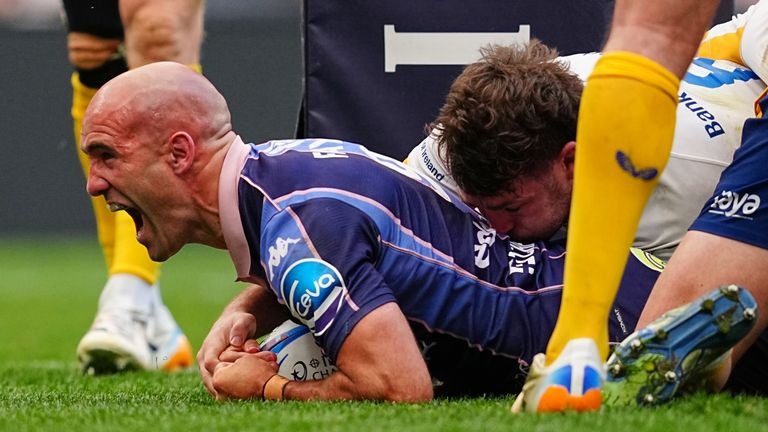
So did Jalibert, LBB, Lucu, Penaud and the rest of this beautiful UBB team all magically arrive in the pro team as the finished article, happy products of blissful unions between talented fathers and athletic mothers? I think not. Each and every one of them has clearly benefitted from an environment in which individual decision-making is based on a personal interpretation of what they can see on the pitch, allied to some common principles which run through the team’s core philosophy. How does an individual, and a team, get better at this? By practising it, in training, every week. The message needs to be consistent, and straightforward, and easy to understand. All the studies of how we learn tell us that if you change the message every week, within 7-10 days you will have forgotten the previous message. Consistent, straightforward, easy to understand. The coaches must also create and reinforce an environment in which mistakes are quickly forgotten, or moved on from. Fear quickly kills creativity. The famous Deleplace/Villepreux ‘second ball’ is for precisely this purpose: move on, let’s reward the good position that these three players have taken, and not dwell on some simple mistake. Or worse still, stop the game completely for another coach monologue. By the way, they stopped listening after the tenth word.
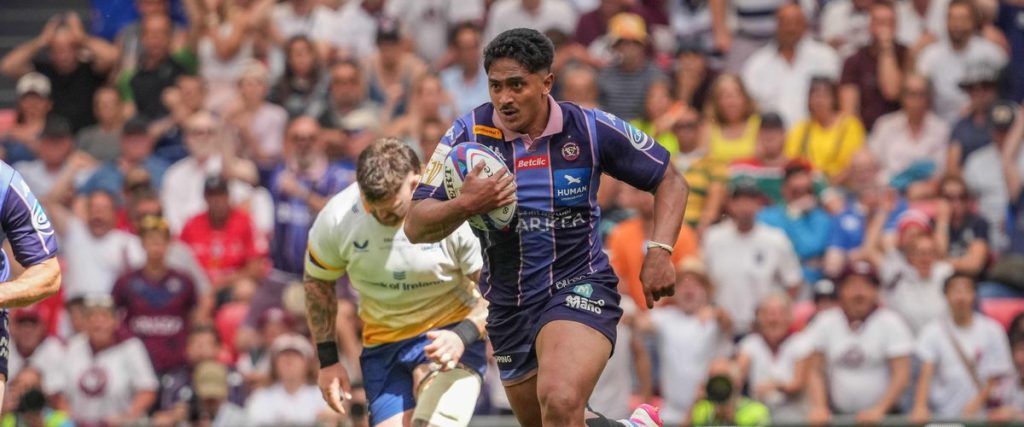
In contrast, Leinster, and Ireland, are now shackled to a style of play which seems designed to remove individual decision-making from the game. It looks more like ‘we do A, then we do B, and then we do C’, with little or no regard for how the opposition are reacting. If we plan to ‘play where it is easy to play’ (in space), then we need to be reading the opposition’s reaction to what we are doing with the ball, not simply ploughing on regardless. The best players read the game quicker and better than the rest, as I have heard Pierre Villepreux say many times. Think Thomas Ramos, Oscar Jegou and Yoram Moefana. That’s one from each of the three French sides who between them now account for the last six European titles. And talking of reading the game, what better evidence of UBB’s ability to read the Leinster game than the number of crucial interceptions by the Bordelais in Saturday’s final? Or Maxime Lucu’s dive under the posts, based on seeing the Leinster defence heading out wide, fearing UBB ‘playing in the same direction’ (as quoted in this morning’s Midi Olympique). Read the game, read the opposition, allow individuals to make decisions.
If your club, in particular your coaches would like to learn more, then be at Kingham Hill school, just west of Chipping Norton for the last week in July.