

When Ange Capuozzo scored for Stade Toulousain against Stade Rochelais, it looked like individual brilliance. But brilliant tries aren’t accidents, they are the product of players executing core principles under pressure. The LPM (Le Plaisir du Mouvement) method gives us a framework to understand exactly how Toulouse created this score and, more importantly, how coaches can teach these principles to create similar opportunities.
The Try: A Symphony of Principles
Let’s break down what happened, phase by phase, through the lens of LPM principles.
Contest Possession: Positioning for Chaos
The sequence begins with a kick receipt, and immediately we see Antoine Dupont demonstrating the utility principle. Initially running back to support his 10 and 15, Dupont reads that the kick is short and immediately repositions himself on the opposition side of the landing zone—2-3 meters from the contact point, exactly as you would attack a kickoff. He is putting himself where he’ll be most useful.
This isn’t luck. It is a player understanding his role at kick receipt: be ready to contest possession and capitalise on any loose ball.
Go Forward + Same Way: Creating Numerical Advantages
Dupont recovers the ball and makes two critical decisions in an instant:
- Go forward – he attacks space immediately
- Same way – he runs in the direction of the attack (left to right)
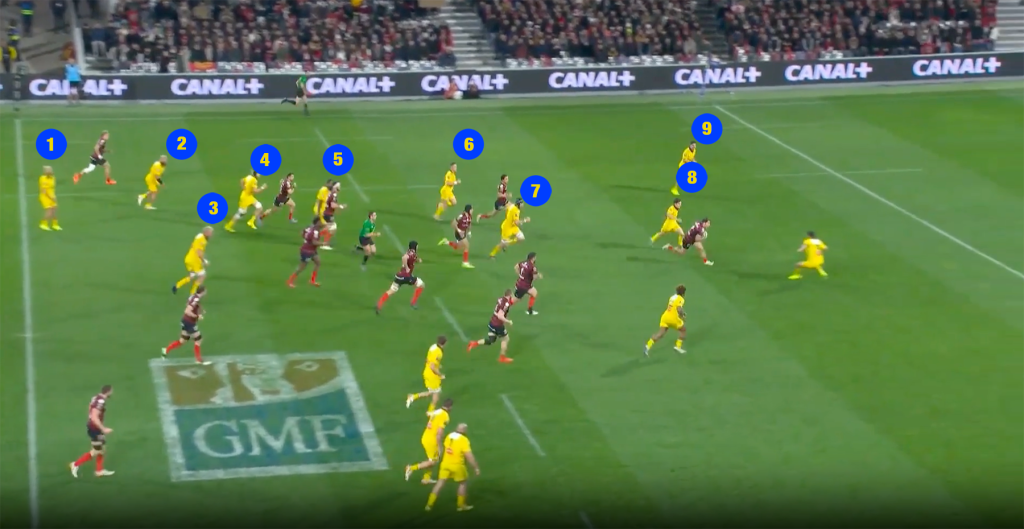
Ten seconds into this clip, this simple decision has created a massive problem for La Rochelle’s defence: nine defenders are now trapped on one side of the ball, with only six defenders covering half a pitch. This is the power of “same way”—it is not about fancy plays, it is about consistently moving the ball in the direction that stretches the defence.
Keep Ball Alive: The One-Handed Offload
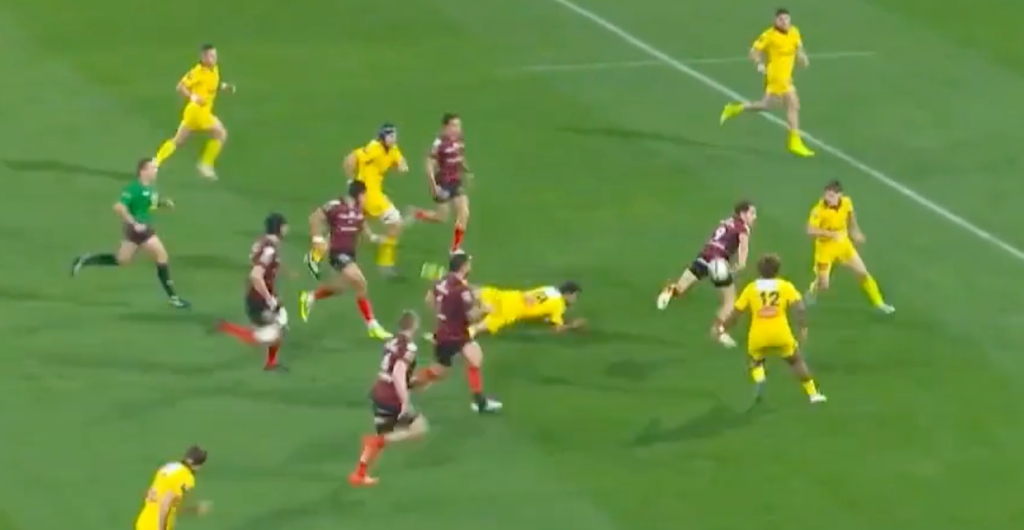
Dupont engages a defender but crucially keeps the ball alive with a one-handed offload to Baille. This is continuity under pressure—preventing the defence from reorganizing by maintaining momentum through contact.
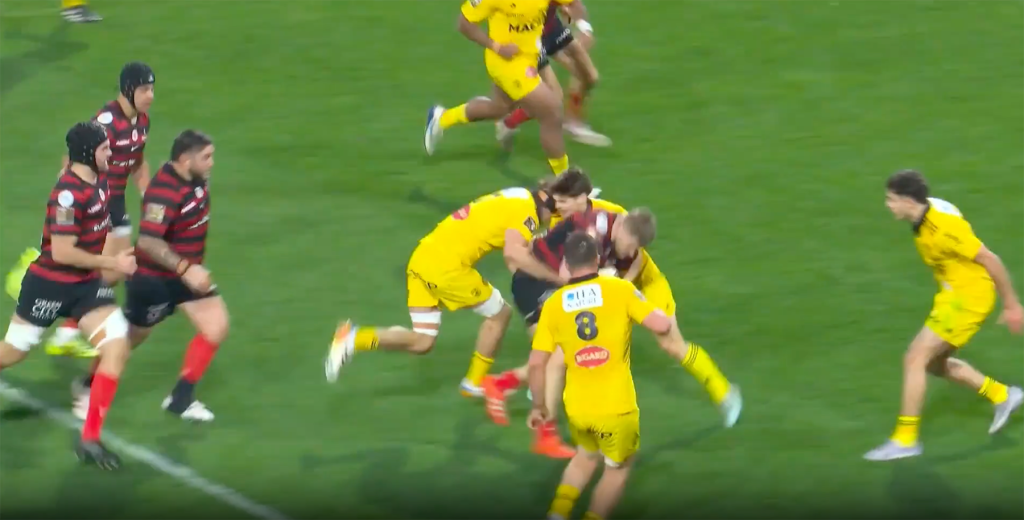
Baille transfers to Willis, who engages two defenders. Notice how Baille immediately becomes close support—following the life of the ball. This is players understanding their roles dynamically: when you pass, you become support.
Support Structure: Early, Deep, and Organized
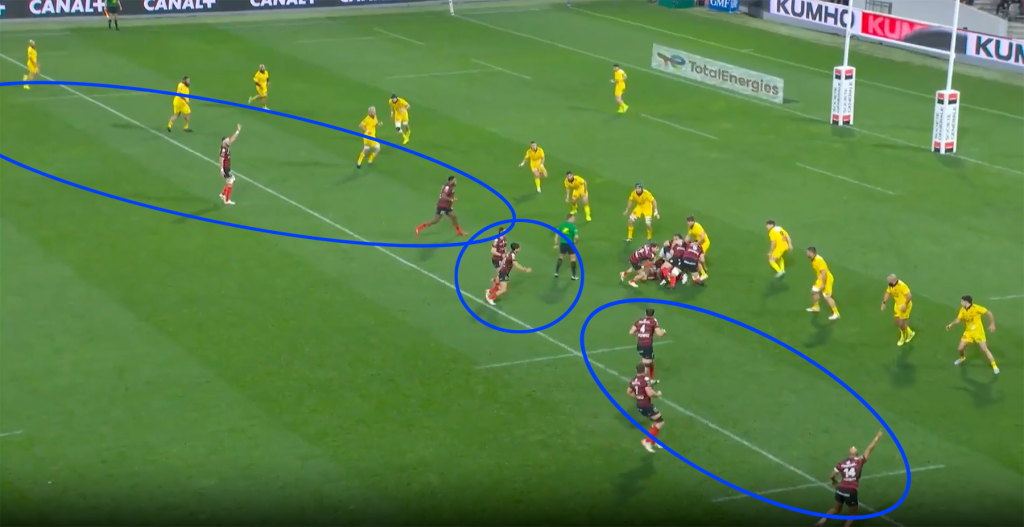
The ruck lasts just long enough for support to organize, and here is where we see the full LPM support framework:
- Early support in the direction of play: Brennan, Jelonch, and Thomas arrive quickly, positioned to continue moving the ball the same way
- Deep support: Capuozzo and Ramos position themselves behind the ball, creating attacking depth
- Late support: More players organize on the open side, maintaining width and options
This isn’t random. It’s players understanding three types of support and automatically filling those roles.
Same Way (Again): Dupont’s Decision
Dupont receives the ball from the ruck. He checks left (against the direction of play) but goes right—to the expected side, continuing “same way.” Why? Because that is where the numerical advantage is. That is where the space is.
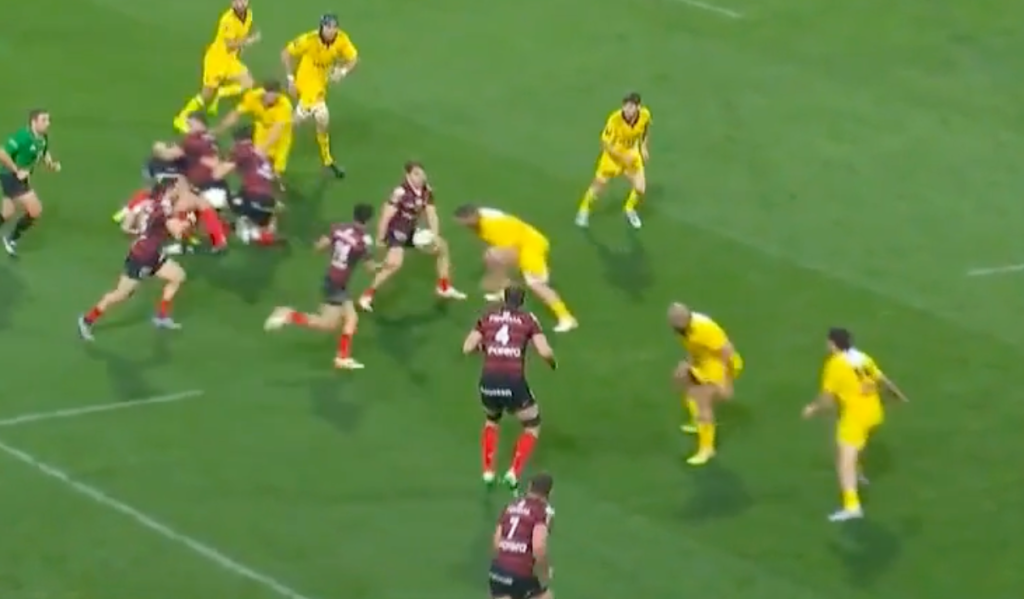
He delays his pass just long enough to engage another defender, creating a gap for Capuozzo.
Penetration Game: Capuozzo’s Line and Brennan’s Support
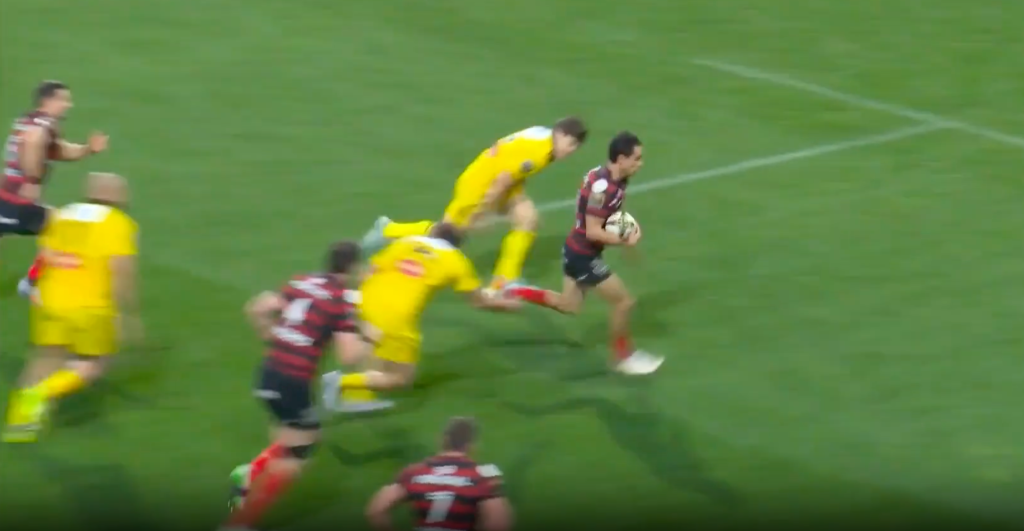
Capuozzo runs a perfect penetrating line through the gap. This is jeu pénétrant (penetration game) in action. Even though he is clearly through, watch what happens:
- Ramos adjusts his line to support on the inside
- Brennan converges to provide outside support if needed
This is the penetration game principle: when someone makes a break, support players immediately adjust their lines to support the ball carrier, creating multiple threats and ensuring continuity even if the defence recovers.
Pressure: Don’t Let Defence Reorganize
The entire sequence—from kick receipt to try—happens at pace. Toulouse never allows La Rochelle’s defence to reorganize. This is applying constant pressure through continuity and maintaining the tempo.
How Can LPM Help Teach This?
The beauty of the LPM method is that it breaks down what looks like chaos into teachable principles:
1. Utility Principle
Players learn to constantly ask: “Where am I most useful right now?” Dupont’s positioning at the kick, Baille becoming support after his pass, Capuozzo providing deep support before receiving—all examples of players maximizing their utility. Watch the try again and follow where Capuozzo is on the kick, when Dupont recovers the ball, when he makes his break, at the start and end of the ruck. How does he readjust where he is most useful.
2. Go Forward + Same Way
Two simple rules that create space: attack forward first, move the ball in the direction that stretches the defence. These become decision-making filters for players under pressure.
3. Keep Ball Alive (KBA) + Life of the Ball
Players understand that continuity is the weapon. Keep the ball alive through contact, and follow the life of the ball after you pass. This creates the flowing rugby that makes defences crack.
4. Support Structure: Early, Late, Deep
Instead of “support the ball carrier,” LPM gives players specific roles based on their position relative to the ball. This creates organized chaos—players filling roles automatically rather than everyone rushing to the same spot.
6. Direction of Play + Same Way
Maintaining direction creates cumulative pressure. Each phase in the same direction compounds the defensive problem. La Rochelle’s nine defenders trapped on one side didn’t happen by accident—it happened because Toulouse kept going “same way.”
7. Penetration Game + Support Lines
When someone breaks the line, support players adjust their running lines to create multiple threats. This turns individual breaks into team tries.
8. Pressure + Continuity
The defence never gets time to reorganise because Toulouse maintains tempo through quick ball and good support positioning.
From Principles to Practice
What makes LPM powerful is not that it names these principles. it is that it gives coaches a framework to:
- Recognise these patterns in games
- Name them in a common language
- Practice them in ways that are repetitive without repetition
- Reinforce them through questioning and game understanding
Capuozzo’s try is not magic. It is players executing core principles under pressure:
- Dupont positioning for utility
- Going forward to create pressure
- Keeping the ball alive through contact
- Support arriving early, deep, or late
- Maintaining direction to compound defensive problems
- Running penetrating support lines when the break happens
These are all trainable. These are all teachable. And that is the power of the LPM method, it turns what looks like brilliance into repeatable, coachable rugby.
Watch the try again with these principles in mind. Suddenly, the “magic” becomes visible… and teachable.